

Edge Vision without a PC
At a glance
- Topic:
- Edge Vision for automated process monitoring with streaming, recording and AI in the Dark Factory
- Key message:
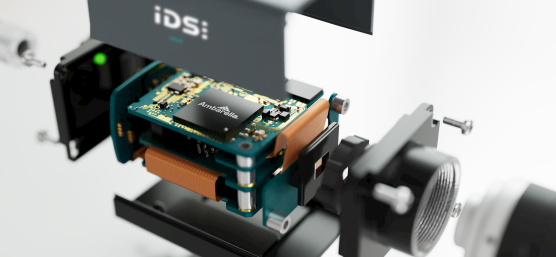
- uEye Live combines monitoring, recording and AI-based analysis directly on the camera, thereby reducing system complexity
- Reader benefit:
- The article explores how edge vision can detect process deviations, support root cause analysis and simplify the adoption of industrial AI.
Intelligent monitoring cameras for the Dark Factory
Video streaming is often the first step towards digital process monitoring. In modern manufacturing environments, however, simply making machines and processes visible is no longer enough. Production managers want to understand processes, detect deviations and be able to react to events automatically. At the same time, systems need to be easy to integrate, secure and cost-effective to scale. This trend is particularly evident in the concept of the dark factory: a highly automated production environment that operates around the clock without requiring a permanent human presence.
In such environments, cameras become key sources of information. They continuously monitor processes, document events and provide the data needed for automated decision-making. This calls for solutions that can do far more than simply capture images. They need to intelligently combine streaming, recording, event detection and analysis, ideally without an additional industrial PC, costly peripherals or complex programming.
From inspection system to autonomous process monitoring
Industrial image processing has traditionally focused primarily on detecting defects and deviations. Today, understanding process behaviour and identifying root causes are becoming just as important. Users want to understand how certain system states develop and why faults occur. This requires systems that capture relevant image data and provide a basis for analysing processes and identifying the causes of errors. At the same time, such solutions must be easy to integrate, secure to operate and economically scalable.
Growing demands for process analysis and monitoring often result in complex system architectures. Camera, industrial PC, software, storage and interfaces all need to be integrated and maintained. Every additional component increases effort, costs and potential exposure to cyber risks. In this context, the primary purpose of image data is to serve as a basis for understanding plant conditions and analysing the causes of faults. For many applications, these tasks can now be handled far more efficiently: Modern edge vision systems bundle analysis, recording and communication functions directly on the camera, thus reducing the complexity of the overall solution.
A scalable platform for streaming, monitoring and AI
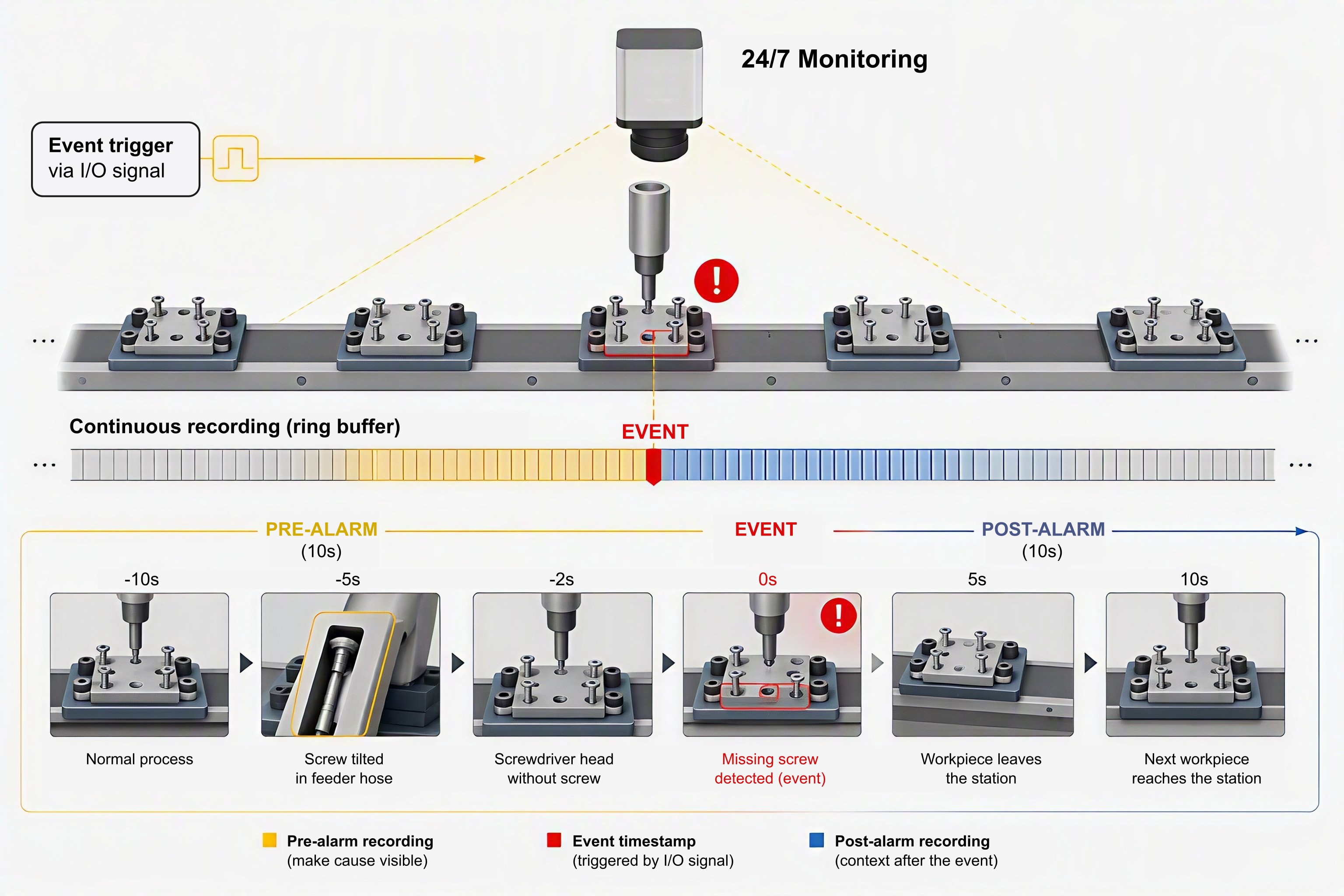
Monitoring cameras combine video streaming, event-based recording and image analysis in a single device. Standardised interfaces such as REST API or OPC UA enable integration into machines, control systems and automation environments. In dark factory concepts, these cameras continuously capture and analyse image data. Unlike with classic image processing systems, possible fault conditions do not have to be fully defined in advance. Instead, the systems can learn typical process sequences or normal operating conditions and detect deviations from them. If an anomaly is detected, the system can generate notifications, trigger outputs or save recordings. A ring buffer not only stores and documents the event itself, but also its origin. This provides a valuable data basis for root cause analysis and process optimisation.
Thanks to scalable platform concepts, users can start with straightforward streaming and monitoring and later extend the application with AI-based image analysis. Operation and system architecture remain consistent across all camera classes.
From image to information
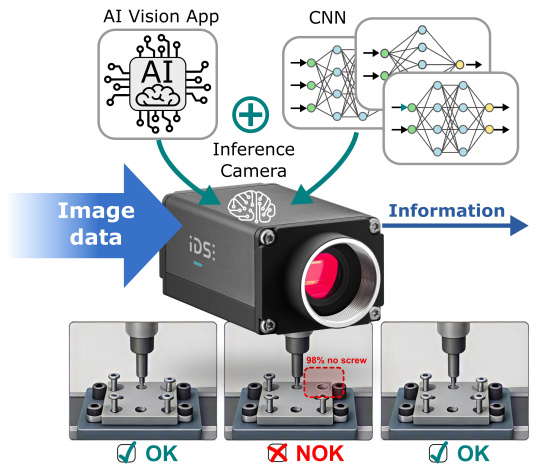
The real value of modern edge vision systems lies in the information gained from image data. The more powerful camera models of the uEye Live family integrate AI accelerators directly into the hardware. Analysis is performed on the camera itself, turning video data directly into useful information about processes, states and events. This information can be visualised or transferred to control and IT systems. Users thus receive not only recordings of faults, but also actionable insights into their causes and correlations. At the same time, the effort for data transfer and external computing hardware is reduced.
Making AI easy to use
However, the success of industrial AI is not determined by the neural network itself. What matters is how easily the technology can be integrated into existing processes and put to productive use. Many companies want to benefit from AI without having to become application developers, image processing specialists or AI experts themselves. For this reason, ready-to-use vision apps are available for typical applications. They run directly on the camera and can be configured via the web frontend. The vision apps form the basis for a modular embedded vision workflow. For specific tasks, they can be extended with trained neural networks. Apps and models are uploaded via the web interface, configured, linked to camera interfaces and activated.
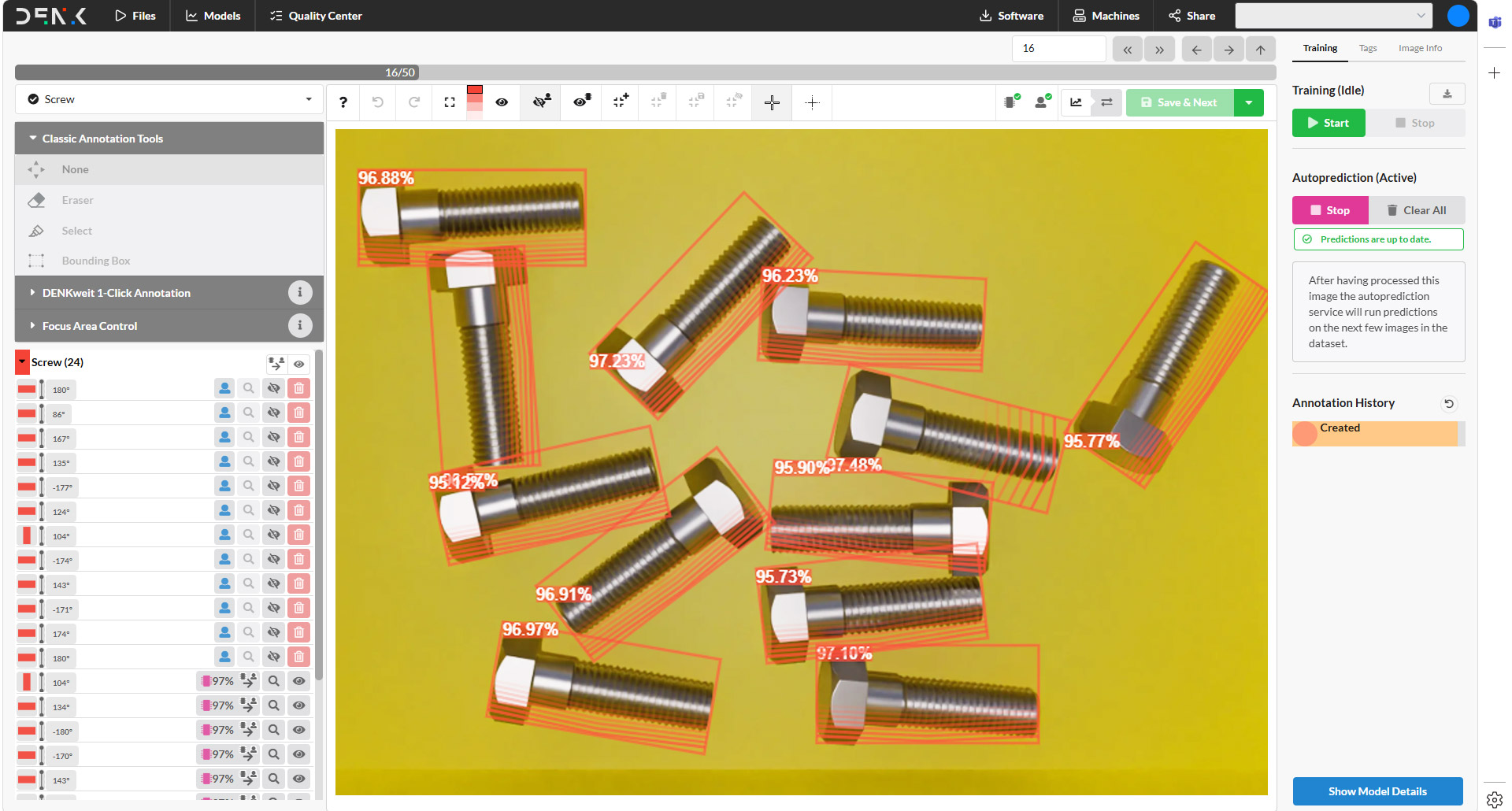
One example of this approach is the collaboration with AI technology partner DENKweit. In the no-code cloud system DENK VISION AI HUB, users can train neural networks without deep AI expertise. The models are then automatically optimised for the AI accelerator integrated into uEye Live cameras and provided as compatible vision apps. Execution times in the low millisecond range enable real-time AI-based analysis directly on the camera.
Data security as a crucial factor
As digitalisation progresses, data sovereignty and cyber security are becoming increasingly important. Edge processing also offers clear advantages in this respect. Streaming, recording, compression, encryption and AI evaluation all take place directly on the camera. Sensitive image data therefore does not need to leave the system.
Local processing reduces dependence on cloud services, minimises latency and helps meet data protection requirements. Encrypted communication protocols, industrial hardware concepts and consideration of current security requirements help protect long-term investments.
Intelligent cameras as a key technology
In the dark factory, cameras are evolving from simple sensors into intelligent tools for process monitoring and operational insight. uEye Live combines monitoring, recording and AI in a scalable edge vision platform. Users gain greater transparency into their processes, can identify the causes of faults more quickly and, at the same time, reduce the complexity of their system architecture. The move towards industrial AI can begin directly at the data source, without the need for additional PC infrastructure.

Dipl.-Ing. Heiko Seitz is working at IDS since 2001. After years as a developer in the field of camera software, he now supports technological communication at IDS as Product Marketing Manager. With his experience, he bridges the gap between complex technology and practical knowledge transfer – for example in technical articles, webinars, or lectures.
Vision Channel
Videos and live sessions about machine vision.
Your project
How can we support you in your project? Together we will find the right solution for you!
Newsletter
Stay up to date and subscribe to our newsletter.