

Computer vision and eye tracking make visual quality inspections traceable
At a glance
- Industry:
- Quality assurance, manufacturing industry
- Camera:
- USB 3 uEye XLE
- Task:
- Combining automated image analysis and manual visual inspection within a digital quality control process
- Challenge:
- Reliably detect errors, reduce redundant checks and fully document inspection results
- Solution:
- QM.AID analyses product images using neural networks and passes components identified as conspicuous to an employee for manual inspection.
- Customer benefit:
- The automatic approval of routine cases reduces the workload for the inspectors. All inspection results are documented in a traceable manner.
When the microscope thinks along
Sometimes a detail that is barely noticeable determines the quality of an entire product. A slight deviation, minor damage, or a small irregularity may be enough for a component to fail to meet quality requirements. Visual inspection therefore demands the highest levels of attention and precision. When performed by people, however, it is inevitably influenced by individual perception. So how can inspections be made more objective without losing the value of the trained human eye?
This is precisely where Antra ID GmbH, based in Geretsried, Germany, comes in with MQS QM.AID. The microscope-based station combines intelligent computer vision with eye tracking. A patent-pending process brings automated image analysis and manual visual inspection together in a single digital workflow. A USB 3 uEye XLE industrial camera from IDS Imaging Development Systems provides the images required for this. The idea is to automatically clear routine cases for the next production step while drawing on human expertise wherever closer assessment is required.
Automating the clear-cut cases
Quality management faces a fundamental dilemma: On the one hand, errors should be detected as reliably as possible and inspections should be fully documented. On the other hand, redundant checks cause additional effort. Purely manual processes also make it difficult to maintain a transparent overview of current product quality and are subject to natural variations in human perception. MQS QM.AID turns this challenge into a division of labour between machine and human. Before the inspection, information on good parts is stored. On this basis, the software uses neural networks to analyse captured product images and identify deviations. Parts showing no irregularities can automatically proceed to the next production step. If, however, the system detects a potentially faulty part, the case is escalated and presented to an employee for manual inspection.
This primarily changes the role of the inspector, as Andrea Révész, Managing Director of Antra ID, explains: "Instead of having to inspect every single component to the same extent, employees can focus on those for which the system has detected irregularities. Particularly in small and medium production runs with high quality requirements, this can significantly reduce the inspection workload."
Making quality traceable
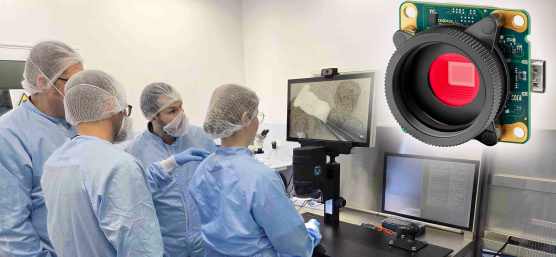
For the manual inspection of deviations, QM.AID combines the camera image with an eye-tracking system. This records which areas of the product the employee has examined. Computer vision with artificial intelligence thus supports the assessment of the component, while eye-tracking accompanies the performance of the required human visual inspection. The entire system comes as a ready-to-use station: microscope, panel PC, eye-tracker, ring light and tripod system are pre-integrated, calibrated and tested. Depending on the application, the monitor is positioned either beside or above the microscope. An ergonomically designed workstation is a key part of the overall concept.
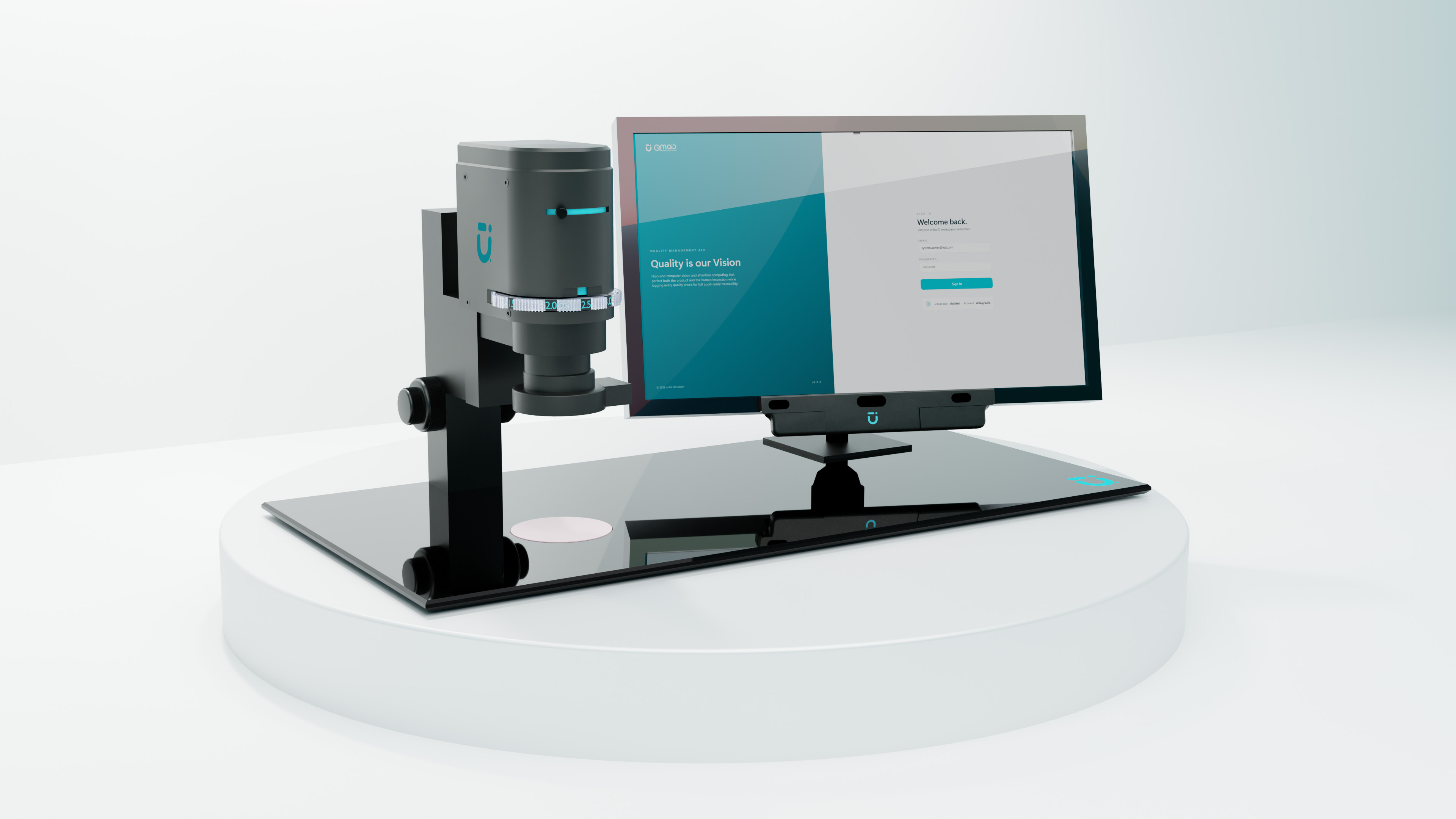
Documentation is integrated as well. Test results are recorded digitally in QM.AID FactSheets within the FactBase and are subsequently available for analysis. Options for ERP integration extend the digital data flow. As the solution is operated entirely 'on-premise', data and models remain within the user's network. The result is a continuous digital process built around conventional visual inspection, ranging from image acquisition and automated preliminary assessment to targeted manual inspection and a traceable inspection result.
Image data as the basis for quality decisions
What the software is intended to assess using AI must first be captured reliably. This is where a USB 3 uEye XLE from IDS comes in. It captures images of the product being inspected and provides the image data to the QM.AID software for further processing. The camera image serves two purposes at once: It provides the basis for analysis by the neural networks and, at the same time, is the image displayed on the monitor for the employee to perform the manual inspection required when irregularities are detected.
When selecting the camera, Antra ID considered the interface, sensor, speed, compact dimensions, and price to be particularly important. The camera is integrated via IDS peak.
"For us, it was essential to find a camera that could be integrated compactly into the microscope-based solution while still allowing flexible control from our own software. With the USB 3 uEye XLE and IDS peak, we can adjust the camera settings directly in QM.AID, even during the live view."
Outlook
As intelligent image processing continues to advance, so does the potential for automated visual quality assurance. QM.AID has therefore been designed as a modular and scalable system that can accommodate a wide range of inspection tasks. The main focus is on demanding manufacturing environments with small and medium production runs, where faulty deliveries can cause high follow-up costs. Antra ID sees suitable fields of application in medical technology, the automotive industry, aviation, electronics and mechanical engineering, among others.
The underlying concept goes beyond automated defect detection: The machine handles routine cases, while people concentrate on the irregularities. Computer vision, human judgement and digital documentation work together to create the foundation for lean, traceable quality processes throughout the value chain.
Antra ID GmbH

Antra ID GmbH is an experienced industrial IT systems integrator specialising in manufacturing. Based in Bavaria, Germany, the company develops targeted solutions that help customers improve product and process quality while increasing overall efficiency.
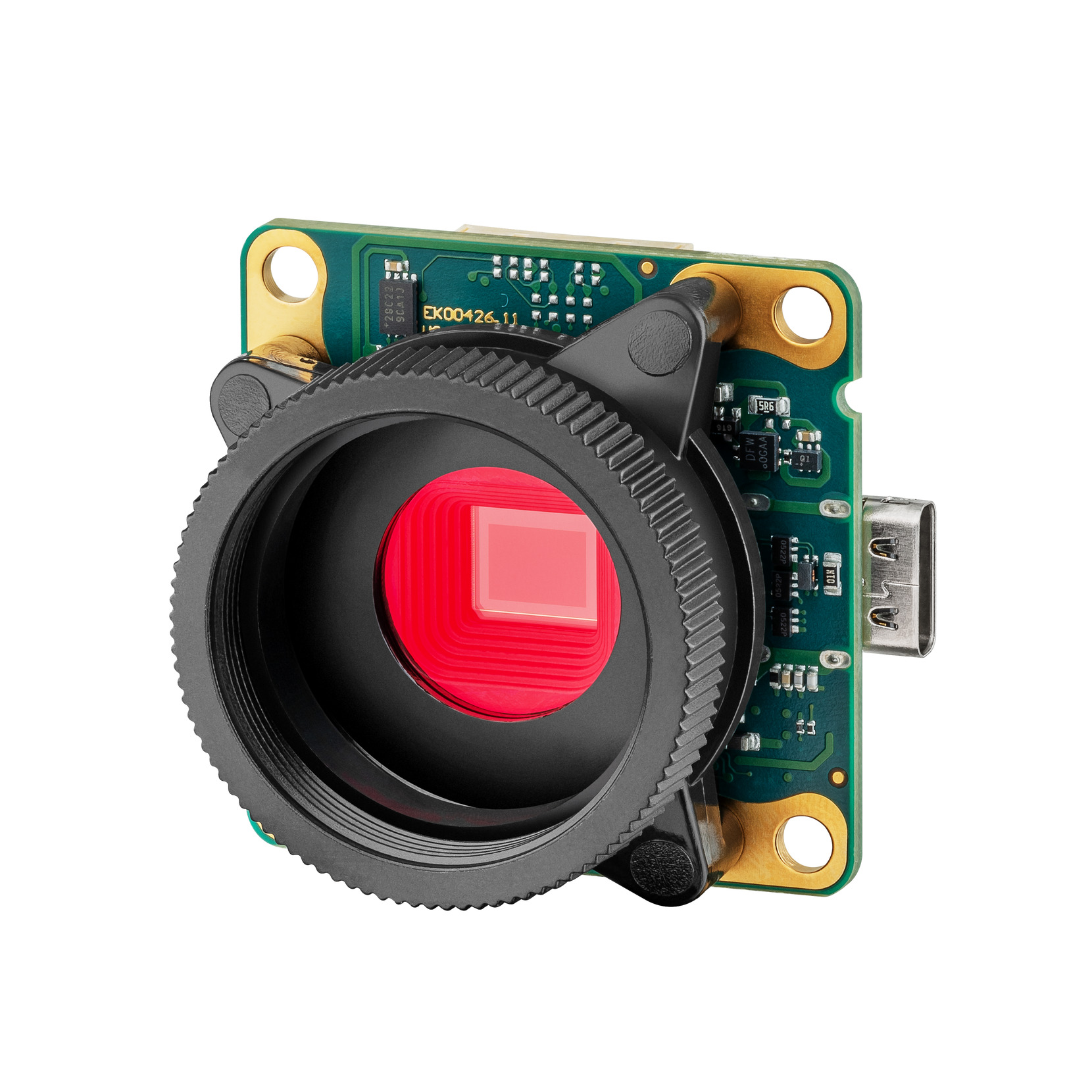
uEye XLE
Model used: U3-3564XLE-C-HQ

She has been designing company profiles, brochures and case studies for over ten years and has supported corporate topics as well as technical product communication. With her background in strategic B2B communication, she ensures clear messages and well-founded content.
Your project
How can we support you in your project? Together we will find the right solution for you!
Vision Channel
Videos and live sessions about machine vision.
Newsletter
Stay up to date and subscribe to our newsletter.